
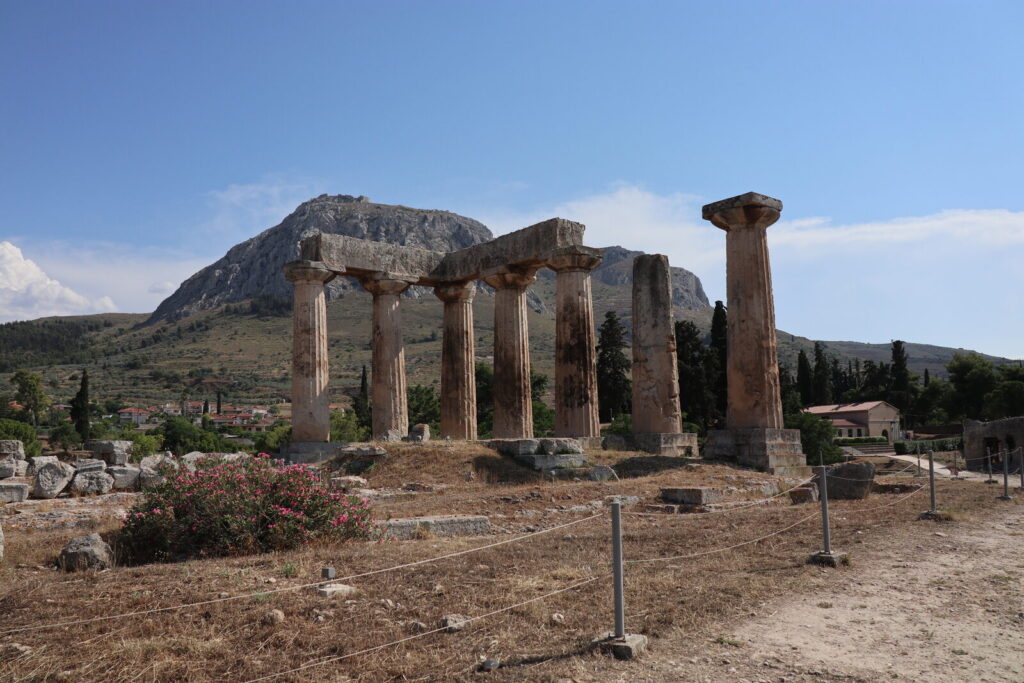
Nineteen kilometres from Loutraki there is a Doric temple that was already two centuries old when Rome was a village, a Roman forum where the Apostle Paul is said to have stood trial, and a mountain fortress that three empires thought was worth holding. You can see all of it in one morning, and one of the two tickets you think you need does not exist.
This guide covers the archaeological site of Ancient Corinth, its museum, and the fortress of Acrocorinth above it: what they cost, when they are open, how long they take, and the handful of things that travel pages get wrong about them. For the engineering spectacle eight kilometres the other way, see our guide to the Corinth Canal; for the quieter half-day west, Lake Vouliagmeni and the Perachora peninsula.
First, three different places called Corinth
This trips up more itineraries than anything else in the area, so it is worth thirty seconds. There are three separate Corinths within a twenty-minute drive of each other, and they are not interchangeable:
- The Corinth Canal — the cut through the isthmus, about 8 km from Loutraki. No ruins, no museum. A bridge, a view and a bungee platform.
- Korinthos — the modern town, rebuilt on the coast after the 1858 earthquake. Supermarkets and ferries’ worth of traffic, no archaeology.
- Archaia Korinthos — the village built on top of the ancient city, with the archaeological site, the museum and the road up to Acrocorinth. This is the one you want.
Book a taxi to “Corinth” and you may well end up in the modern town, seven kilometres from the ruins. Ask for Archaia Korinthos.
What it costs and when it opens
The numbers below come from the Hellenic Ministry of Culture’s own listings for the archaeological site and for Acrocorinth, checked on 8 October 2026. Prices on third-party pages are frequently a pricing round or two out of date.
- Ancient Corinth site + museum: one combined ticket, €15 full, €8 reduced. There is no separate museum ticket — the same ticket admits you to both, and they keep the same hours.
- Acrocorinth: free. The Ministry’s own listing records entry as “Είσοδος ελεύθερη”, with the reduced rate given as €0.
Summer hours at the site and museum, every day of the week: 1–30 April 08:00–19:00; 2 May–31 August 08:00–20:00; 1–15 September 08:00–19:30; 16–30 September 08:00–19:00; 1–15 October 08:00–18:30; 16–31 October 08:00–18:00. Acrocorinth runs 08:30–15:30 all year, every day — including through the summer, which is the detail that catches people out.
Free admission days at the site: 6 March, 18 April, 18 May, 28 October, and the last weekend of September. From 1 November to 31 March the first and third Sunday of each month are also free — a winter-only rule that plenty of guides quote as if it applied in August. Everything closes on 1 January, 25 March, Orthodox Easter Sunday, 1 May and 25–26 December; Good Friday is 12:00–17:00 and Holy Saturday 08:30–15:30.
One honest gap: the Ministry page publishes summer hours for the site in detail but no winter timetable. If you are going between November and March, phone ahead — the site and museum are on +30 27410 31207, Acrocorinth on +30 27410 31266.
The site: what you are actually looking at
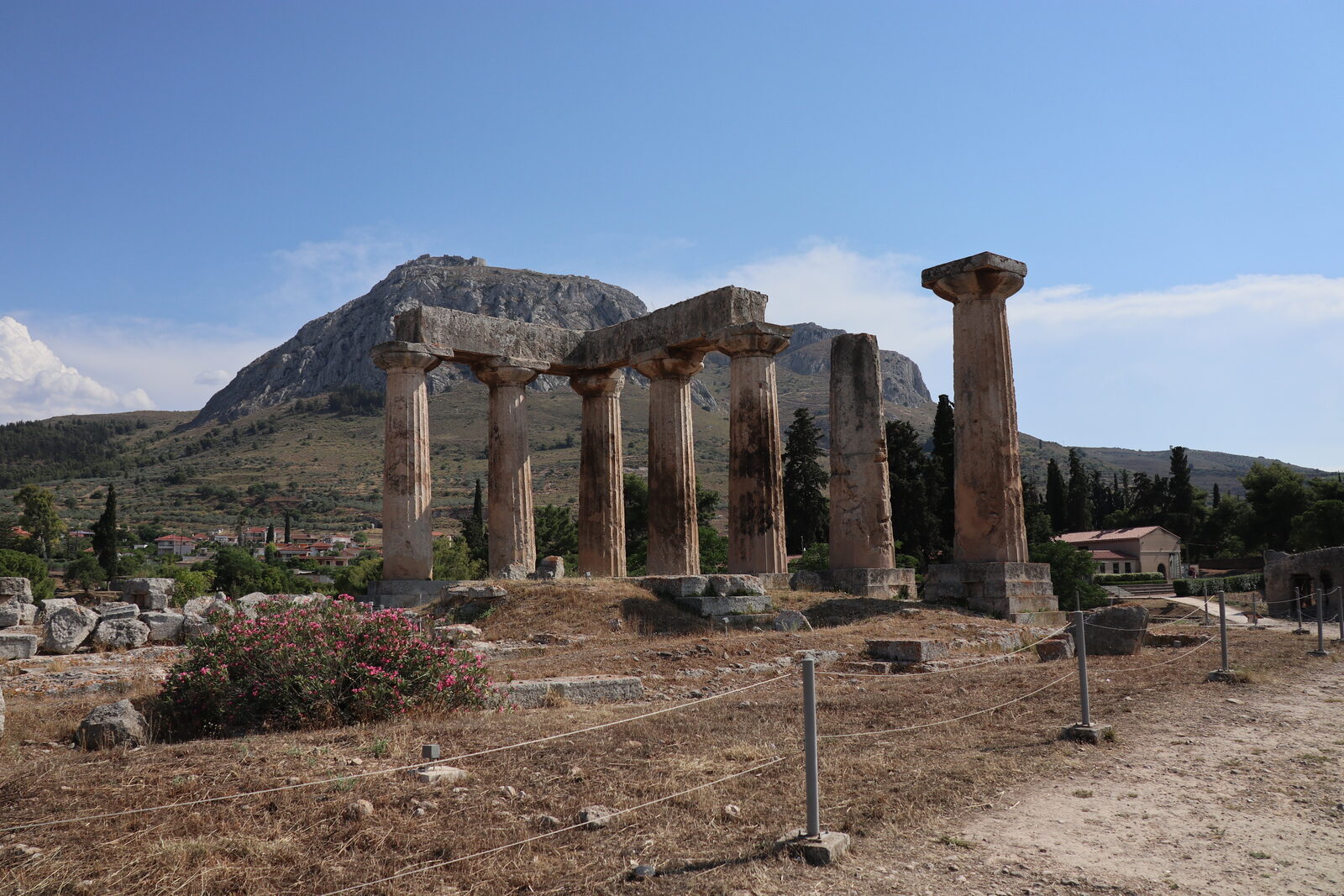
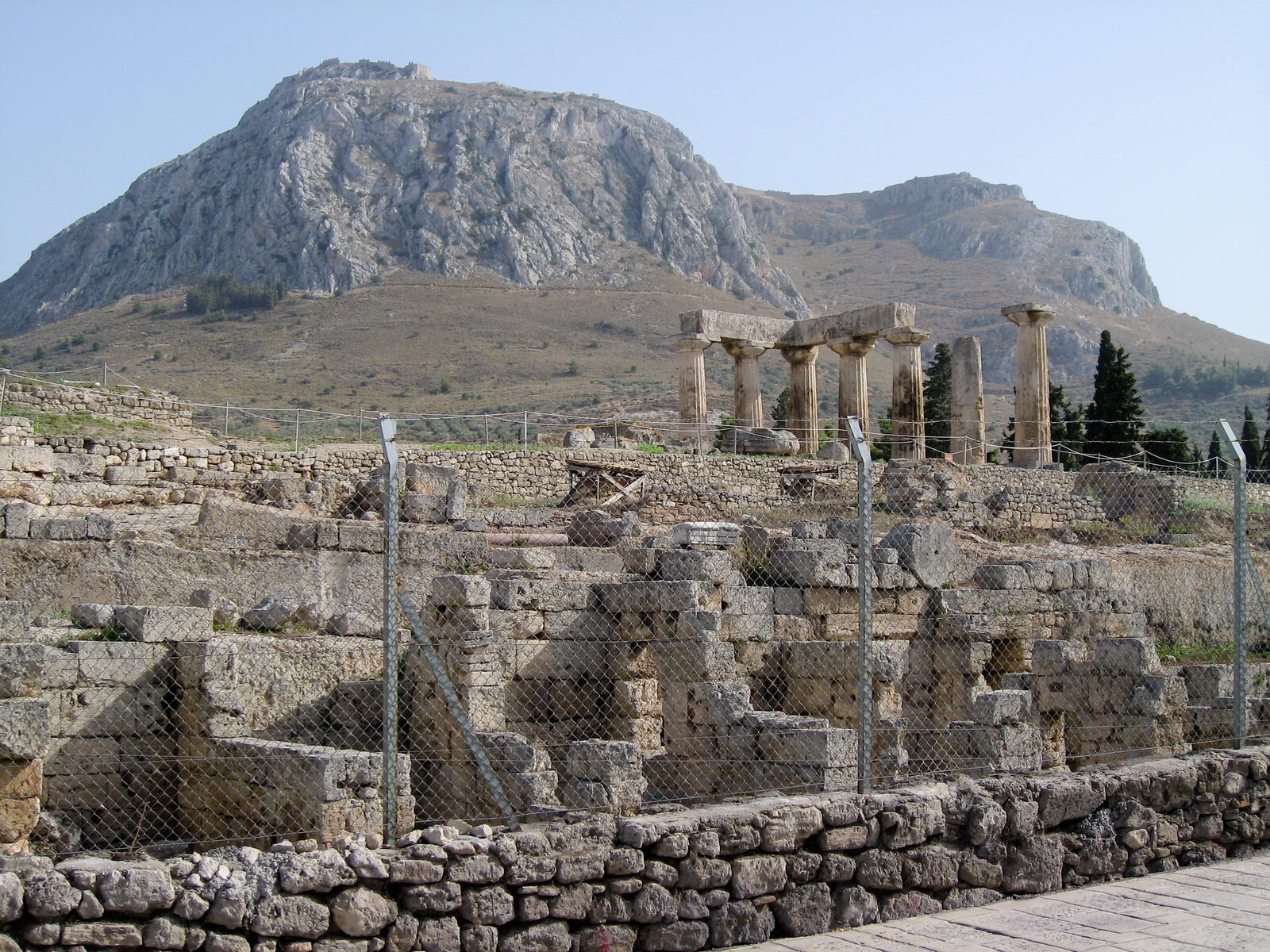
The excavated city spreads around the Temple of Apollo on the low ground below Acrocorinth. The Ministry’s description lists what the digs uncovered: the Roman Forum, temples, fountains, porticoes, baths and latrines. South of the fenced area, outside the ticket, lie the Theatre, the Roman Odeion, the sanctuary of Asclepius and Hygieia, the Potter’s Quarter and stretches of city wall.
Three things reward slowing down. The Temple of Apollo, mid-6th century BC, is the oldest thing standing and the only monument that bridges the city’s two lives. The Peirene Fountain is a spring-fed waterworks that supplied the city for centuries and still holds water. And the Bema, the raised platform in the forum, is the spot traditionally identified with Paul’s hearing before the proconsul Gallio — the reason a steady stream of visitors here are following a book rather than a guidebook.
Why the city was destroyed, and who rebuilt it
Corinth has been inhabited since the Neolithic period — 6500–3250 BC in the Ministry’s dating — because of where it sits: on the land bridge between mainland Greece and the Peloponnese, with a harbour on each sea. That position made it rich, and then it made it a target.
In 146 BC the Achaean League’s forces were crushed by Lucius Mummius’s legions at Leukopetra, near the isthmus. What followed, according to Cicero, Strabo and Pausanias alike, was the complete destruction of the city. For roughly a century Corinth was effectively gone.
Then in 44 BC Julius Caesar refounded it as a Roman colony, for the same geographic reason it had been destroyed. By the middle of the 1st century AD, when Paul arrived, it was a major Roman city governed by two annually elected duoviri on the model of the consuls — a miniature Rome. Almost everything you walk through is that second, Roman city; the Greek one is mostly underneath it.
The museum, and the theft
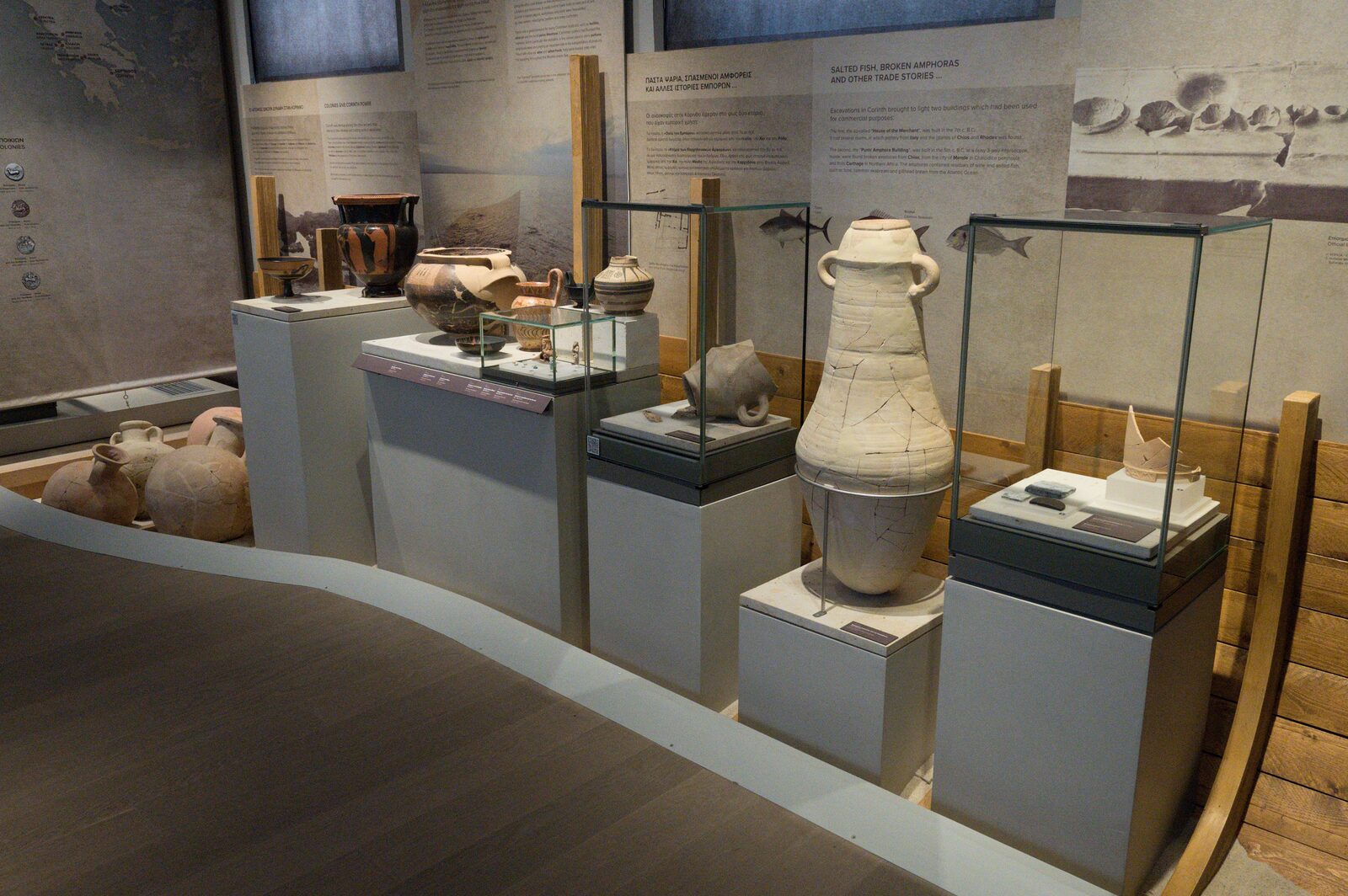
The museum sits inside the site and needs no extra ticket. Its galleries run chronologically: prehistoric finds from Corinth, Korakou and Zygouries; the Geometric to Hellenistic city; the Roman, Byzantine and Frankish city; and material from the sanctuary of Asklepios and the Early Christian cemetery.
The Roman gallery holds something most visitors walk past without knowing: objects stolen from this museum in 1990 and returned in 2001. They were taken in the robbery, recovered abroad, and returned here. They sit in the cases with nothing to mark the journey.
Acrocorinth: free, and a different kind of visit
The fortress is 3.7 km from the site entrance — about nine minutes of switchbacks by car. There is no public transport up and no shuttle; you drive, take a taxi, or walk up a hot road.
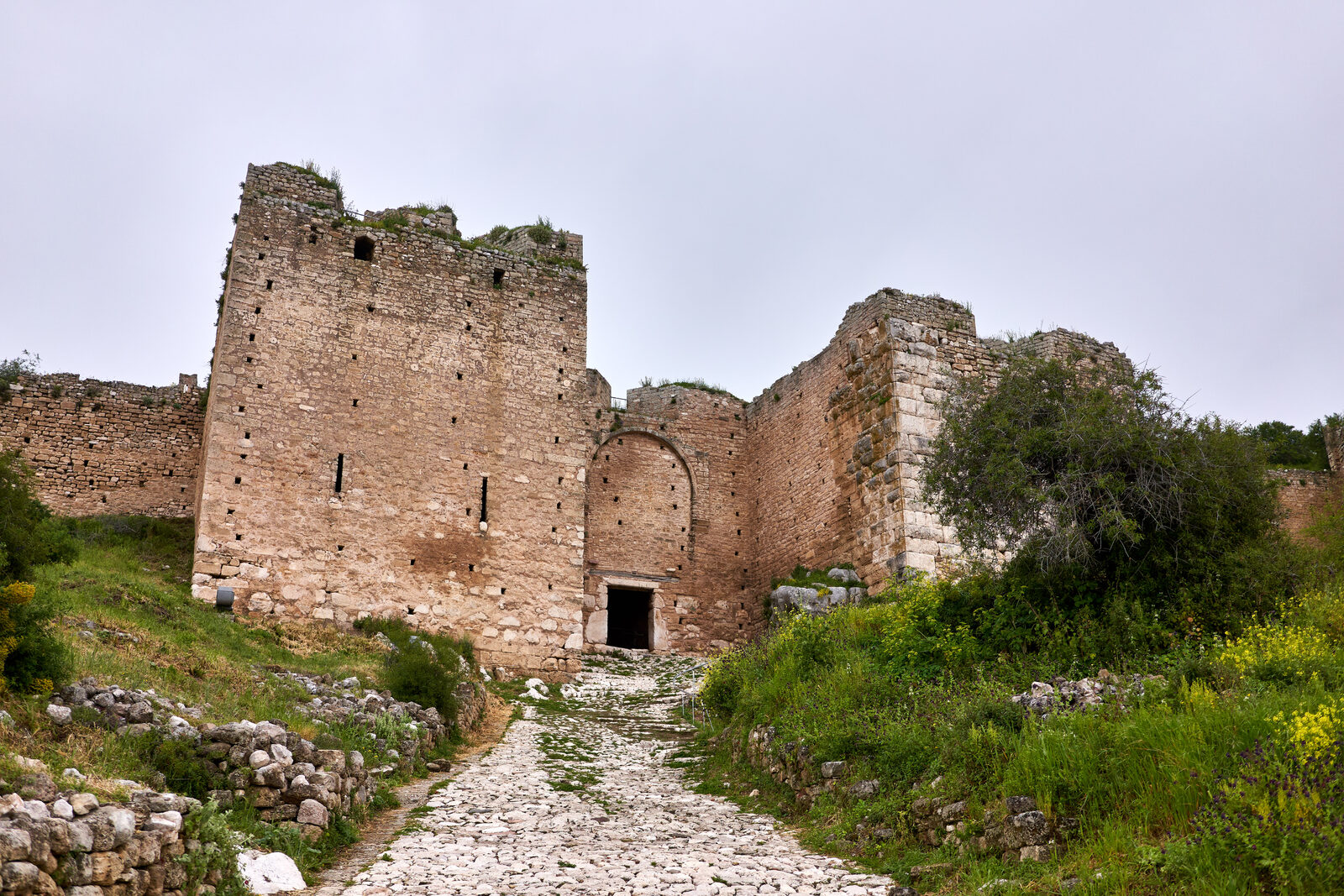
What you get for nothing is a very large walled enclosure with three successive gate circuits, rebuilt in turn by the powers that held it — Byzantine, Frankish, Venetian, Ottoman. Inside the walls the ground opens into a wide, empty plateau of scrub and ruin: cisterns, a Frankish tower, and at the far summit the foundations associated with the temple of Aphrodite.
Practicalities, because this is not a managed attraction: it closes at 15:30 every day of the year, there is no shade on the plateau, no water once you are through the gates, and the surface is loose rock and worn stone the whole way. Sandals are a bad idea; so is arriving at 15:00 and expecting to reach the summit. Give it ninety minutes to do properly.
Four things you will read that are not right
“The combined ticket covers Acrocorinth.” It does not, because Acrocorinth needs no ticket at all. The €15 combined ticket is the site plus its museum. If a page offers to sell you fortress entry, it is selling you a tour, not admission.
“Entry is €8.” That was the old single rate and it still circulates widely. €8 is now the reduced price; full admission is €15.
“The first Sunday of every month is free.” Only from 1 November to 31 March. In summer the free days are the fixed calendar dates listed above and nothing else.
“A thousand sacred prostitutes served the temple of Aphrodite on the summit.” This comes from a single line in Strabo, written centuries after the period it describes and about a city that had been destroyed in the meantime. It gets repeated as though it were an excavation result. The temple whose foundations survive up there is small. We are not going to tell you it is true, and neither should anyone else without producing the evidence.
Planning it from Loutraki
Measured by road routing rather than guesswork: Loutraki to the site entrance is about 19 km, roughly 20–25 minutes; the fortress adds another 3.7 km and about nine minutes on top. Treat those as planning figures, not promises — the last stretch to Acrocorinth is slow.
The sequence that works in one morning: leave Loutraki by 08:30, do Acrocorinth first while the air is still cool and before its 15:30 cut-off becomes a problem, drop down to the site and museum for late morning, and eat in Archaia Korinthos village afterwards. Reverse it in winter, when the low sun on the forum is worth having.
If you are building a fuller day, the canal sits between Loutraki and Corinth and costs you ten minutes of detour. Our things to do around Loutraki covers how these fit together, and the Loutraki travel guide handles the base. Coming straight from the airport instead? Athens to Loutraki has the tolls and timings.
What we have not told you
Four things we left out rather than guess at: the winter opening hours for the site and museum, which the Ministry does not publish; whether the final approach to the Acrocorinth gate is comfortable in a low-clearance hire car; whether there is any step-free route inside either site; and whether the seasonal kiosk below the fortress gate is currently operating. Ask us the week you arrive and we will check rather than estimate.
Stay twenty minutes away
Ancient Corinth is a half-day, not a destination — which is the argument for sleeping near it rather than driving out from Athens and back. The hilltop Villa Elena suits groups large enough for a wedding or a reunion; the beachfront Villa Aura sits on the sea at Skaloma. Send an enquiry and our concierge will build the morning around the opening hours.
Ticket prices, opening hours and closure dates were taken from the Hellenic Ministry of Culture’s own listings for the archaeological site of Ancient Corinth, its museum and Acrocorinth, and checked on 8 October 2026. Historical dates and the museum’s gallery contents come from the same source. Road distances were measured by routing on OpenStreetMap data. Anything we could not verify has been left out and flagged above.
Frequently asked questions
How much does it cost to visit Ancient Corinth?
One combined ticket of €15 full or €8 reduced covers both the archaeological site and the Archaeological Museum of Ancient Corinth, which share an entrance and opening hours. Free admission days are 6 March, 18 April, 18 May, 28 October and the last weekend of September, plus the first and third Sunday of each month between 1 November and 31 March.
Is Acrocorinth free to enter?
Yes. The Hellenic Ministry of Culture lists admission to the Acrocorinth fortress as free, with no ticket required. It is open 08:30–15:30 every day of the year, in summer as well as winter, and closes on 1 January, 25 March, Orthodox Easter Sunday, 1 May and 25–26 December.
How far is Ancient Corinth from Loutraki?
About 19 km, or roughly 20–25 minutes by car to the site entrance in the village of Archaia Korinthos. The Acrocorinth fortress is a further 3.7 km of switchbacks above the site, about nine minutes more. There is no bus to either, so this is a car or taxi trip.
How long do you need at Ancient Corinth and Acrocorinth?
Budget about ninety minutes for the site and museum together, and another ninety for Acrocorinth if you want to walk out to the summit. Both in one morning is comfortable provided you start the fortress early, because it closes at 15:30 regardless of season.
Is the Archaeological Museum included in the ticket?
Yes. There is no separate museum admission — the €15 combined ticket covers the museum and the site, and both keep the same hours. The museum’s Roman gallery displays pieces that were stolen from it in 1990 and returned in 2001.
